

The events of the 1972 Olympics in Munich, in which 11 Israeli athletes were held hostage in the Olympic Village, are still one of the most shocking events in history. Yet it has become a distant memory, even though it has been the subject of films such as Steven Spielberg’s Munich and the Kevin MacDonald-directed documentary One Day in September. Now we get September 5, a film that shows the events from a different perspective: the sports broadcasters who were there to film the games ended up being the news source.

The games of the Munich Olympics in 1972 were the first to be broadcast live by ABC TV, with a wealth of cameras and a team of sports directors, presenters and reporters showing the world as many events as possible. This changes when they hear gunshots, and as they investigate, it becomes apparent that they are in the middle of something they never expected. As they have the resources and cameras, they become pivotal to telling the events as they happen.
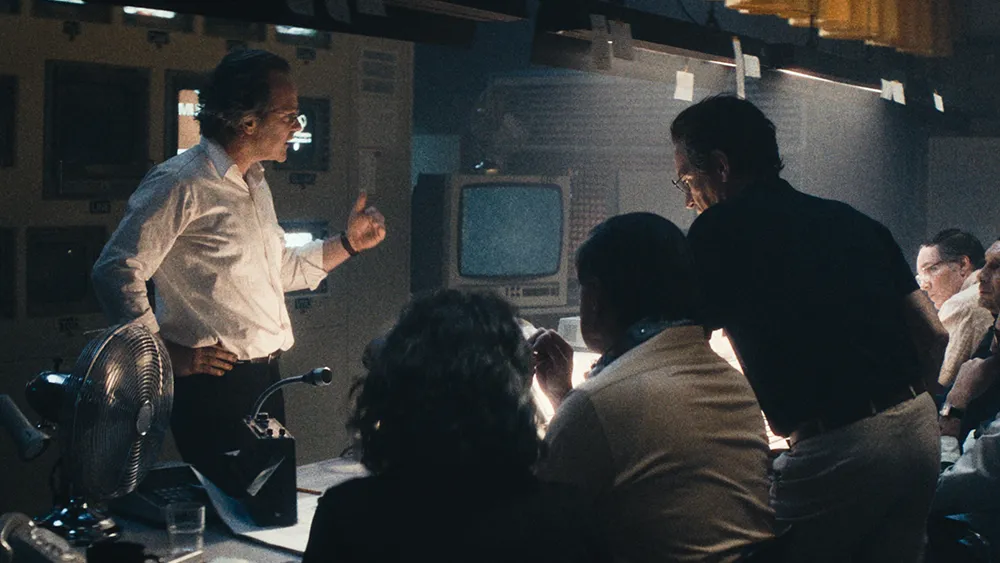
One of the films touted for awards, although only nominated at the Oscars for Best Original Screenplay, may split the viewer’s opinion. This film plays out two different events simultaneously: what is happening within the Olympic Village and what is happening inside the makeshift TV production booth. In fact, it rarely leaves the confines of the claustrophobic rooms and corridors where ABC had set up base. It also cleverly uses the footage from the broadcast that the world watched in 1972. Director Tim Fehlbaum made the right decision to have the audience experience the events without recreating them, including the actual reporting by presenter Jim MacKay.

It also captures the tension of working in the television industry, from the studio filled with buttons and switches while directors and producers put together the images to be shown to how they made the captions that pop up on the screen. The production design is as authentic as possible, with the clunky cameras and equipment feeling like something from the middle-ages. It works as a film that gets the audience in the heart of the action.
Where the film falls down slightly is the thing that it is being nominated for. Considering that this was such a horrendous event happening in front of everyone’s eyes, the script and direction slow things down, and it only picks up in the final act. It feels longer for a film that is just over 90 minutes. Long scenes of the production team arguing about what the heads of the TV company want and how this group of men wish to the glory to take away from what is happening outside. This film seeks to have the same effect as Broadcast News and Spotlight but lacks the script’s impact.
There is no denying that this story needed to be revisited, yet it seems an extraordinary time to do so. Without the politics getting in the way, you cannot help but wonder why now, considering what is happening in Gaza. No matter your views, it does affect how you see this. A few years ago, this would have had much more impact. Now, you find yourself questioning the timing and if this was deliberate.
Having said that, the performances are universally on point. Peter Sarsgaard, John Marago and Ben Chaplin, as the main protagonists trying to deliver the story, are all outstanding, with Marago, the producer, thrown into the position of being in charge, particularly standout. German actress Leonie Benesch, as the only woman who can translate the news on German radio, makes a more minor part have a real impact.

September 5 has all the hallmarks of a decent thriller about a horrific event in modern history. Yet, with its pacing issues and the timing of the release, it doesn’t hit the heights of decent journalistic movies, which is a pity as this could have been a classic of the genre.
3 out of 5
Director: Tim Fehlbaum
Starring: Peter Sarsgaard, John Marago, Ben Chaplin, Leonie Benesch, Corey Johnson, Marcus Rutherford, Zinedine Soualem, Georgina Rich, Daniel Adeosun
Written by Tim Fehlbaum, Moritz Binder and (co-writer) Alex David
Running Time: 95 mins
Cert: 15
Release date: 6th February 2025
 Stu Loves Film