
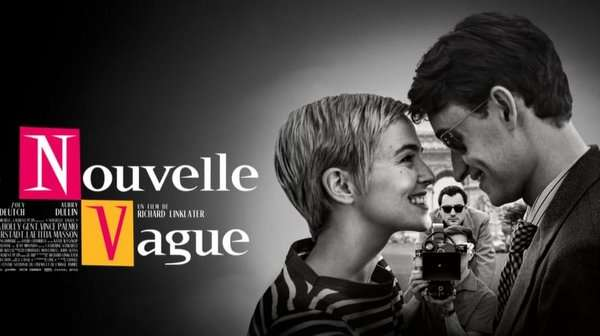
The French film Breathless is regarded as a milestone in cinema history. A French New Wave classic by controversial director Jean-Luc Godard, it was a film that threw the rulebook of storytelling and filmmaking out the window. It has since become an influential film for filmmakers and film students alike. Richard Linklater, the director of The Before trilogy and School of Rock, has made a film about the making of that film, and has produced an affectionate, charming, ultra-cool tale of the chaos behind a masterpiece.
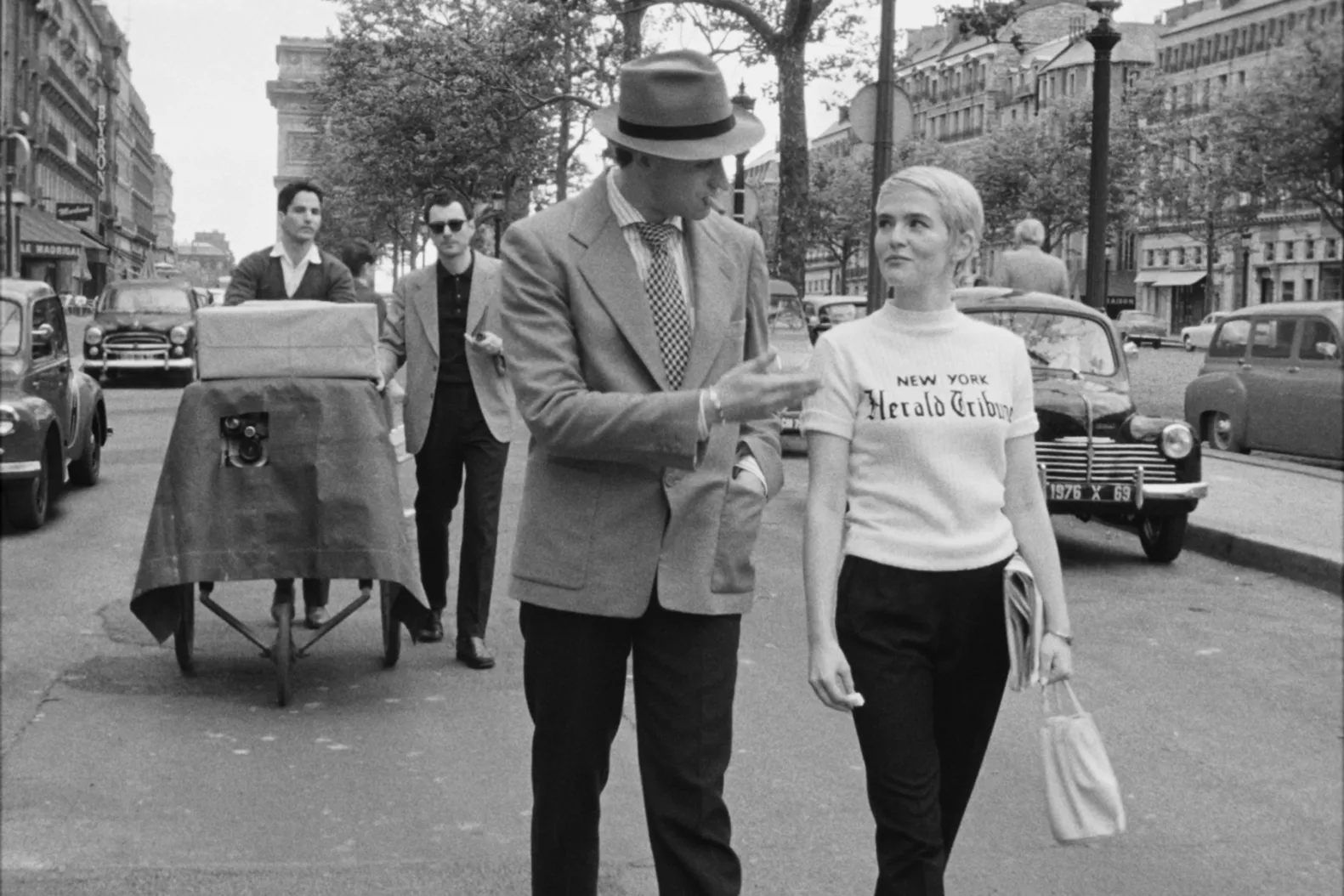
Jean-Luc Godard is a film journalist for a French magazine and dreams of making a movie. He manages to get together a producer willing to back his idea, along with two actors, Jean-Paul Belmondo and the American Jean Seberg to star, but his unconventional way of filmmaking frustrates both his panicking producer and his stars, as he wanders around France taking random shots that don’t seem to make any sense, yet he is the only one who believes in the project.
You don’t have to know much about the finished product, or even have seen it, though once you watch this, you’ll probably want to track it down. Linklater has made a film about filmmaking that is accessible to anyone, even though it is mainly in French. He has some neat tricks up his sleeve to make it easy to follow, and those who are in the know can recognise those involved in producing this new movement in cinema.
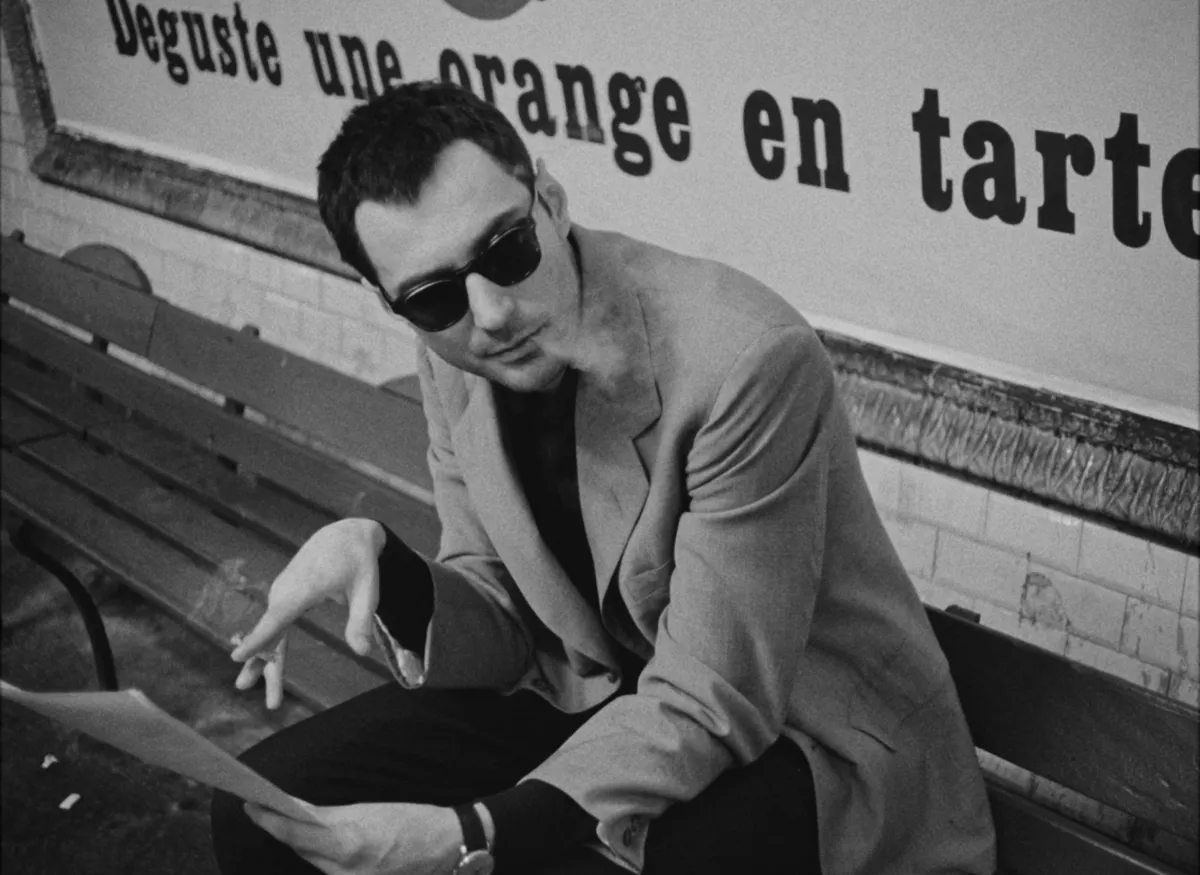
As each new face appears on screen, the person’s name appears, and they look directly into the lens. Even though this breaking of the fourth wall could be annoying, it fits perfectly into the style of filming Linklater has produced. Shot in black and white, it sets us neatly in the world of the late 50s, when smoking was cool and so were the people making movies. You are transported to a world where so many French people wanted to make their mark on cinema, having been brought up on Bogart, Orson Welles, and other American stars.
Once Godard starts filming his masterpiece, the film becomes a fascinating peek at behind the scenes with the cast and very small crew making the film almost guerrilla style, setting up a shot, shooting and moving on, with Godard deciding when he films without sharing a script with anyone, just making it off the hoof. Thankfully, the whole experience is just a joyous celebration of how mad this kind of cinema was, and yet it still worked.
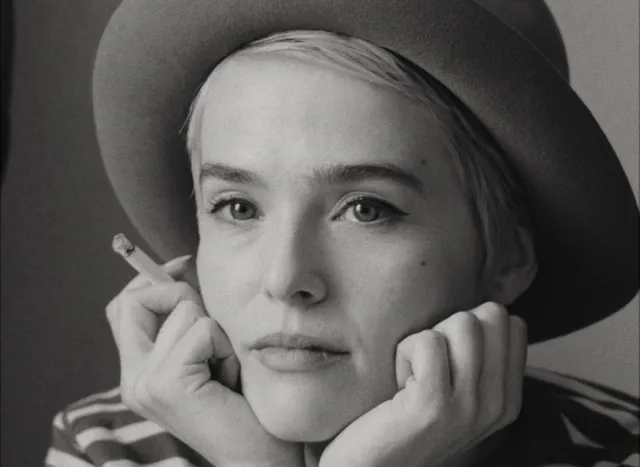
Along with the black-and-white cinematography, the perfect sense of period, and a delicious soundtrack, the performances are superb. Guillaume Marbeck makes for a moody Godard, his dark glasses concealing his eyes; he moves through the movie with a carefree attitude and captures an artist determined to create something memorable. As Belmondo, Aubry Dullin looks exactly like the star, and even though he has very little experience as an actor, he just seems to be enjoying the process.
The stand-out performance is Zoey Deutch as the tragic actress Jean Seberg. Deutch, who has appeared in such films as Juror #2 and Not Okay, will certainly be put on the map after this. She is delicate, glowing and absolutely shines as the actress, even when her patience is being pushed to the limit. There’s so much charisma given out that she lights up the screen with her presence. It would surprise me if we get to see more of the delightful actress.
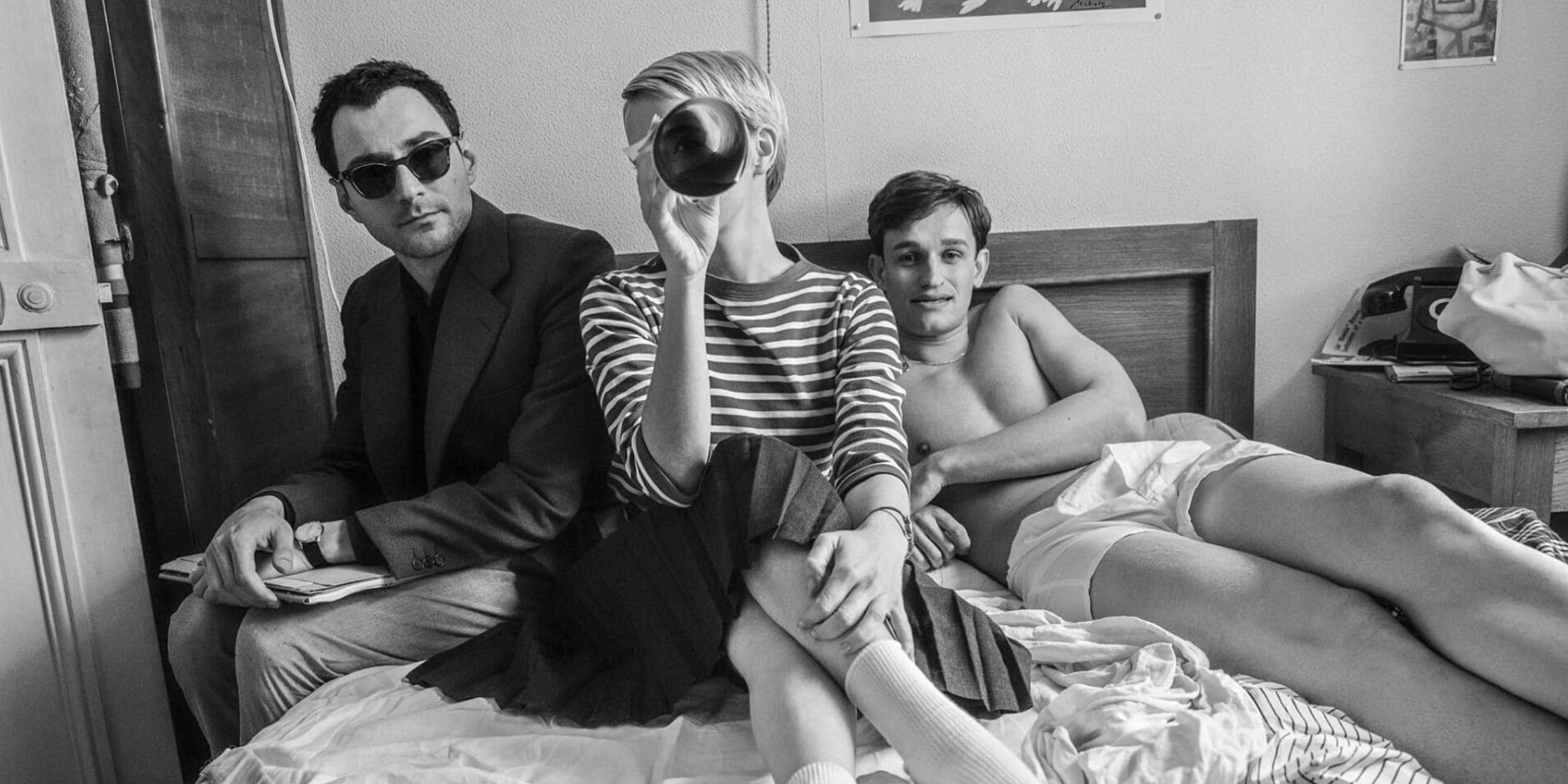
Nouvelle Vague is a film fan’s delight. A film that transports us back to a time often ignored and proves that France in the 50s was one of the coolest places around. It’s funny, intersting and intelligent and a surprisingly joyful celebration.
4 out of 5
Director: Richard Linklater
Starring: Guillaume Marbeck, Zoey Deutch, Aubry Dullin, Adrien Rouyard, Antoine Besson, Jodie Ruth-Forest, Bruno Dreyfust, Benjamin Clery
Written by: Holly Gent, Vincent Palmo Jr, (adaptation and dialogue) Michèle Halberstadt and Laetitia Masson
Running Time: 106 mins
Cert: 12A
Release date: 30th January 2026
 Stu Loves Film