

There is a lot of buzz around the Spanish drama La Bola Negra, especially after its directors, Javier Ambrossi and Javier Calvo, won the Best Director award at this year’s Cannes. Often, when this happens, you find yourself not connecting with a film or even going the opposite direction. Thankfully, the buzz is true, and what we have is an epic love story that manages to balance three stories, all connected, across generations, and delivers a powerful, beautiful tale crammed with themes and becoming one of the frontrunners for Oscars next year.
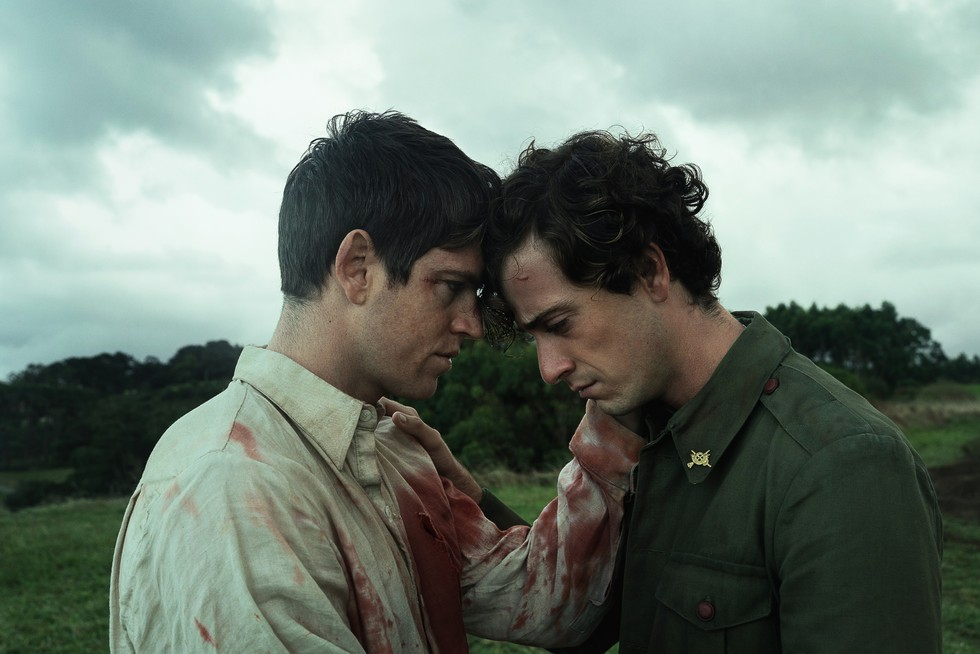
Three men in three different time zones: Carlos is a young man from a wealthy family who is refused membership at a casino because of the rumours about his homosexuality; Sebastian, a young trumpet player, is forced into the Spanish Civil War as a soldier to keep guard on a Republican prisoner, Rafael Rodriguez Rapun, wounded during the conflict, and the Nationalists want Sebastian to obtain information from the soldier. In 2017, Alberto, a historian, receives an inheritance from a grandfather he has never met: a manuscript for an unfinished play by Federico Garcia Lorca that connects all the stories.
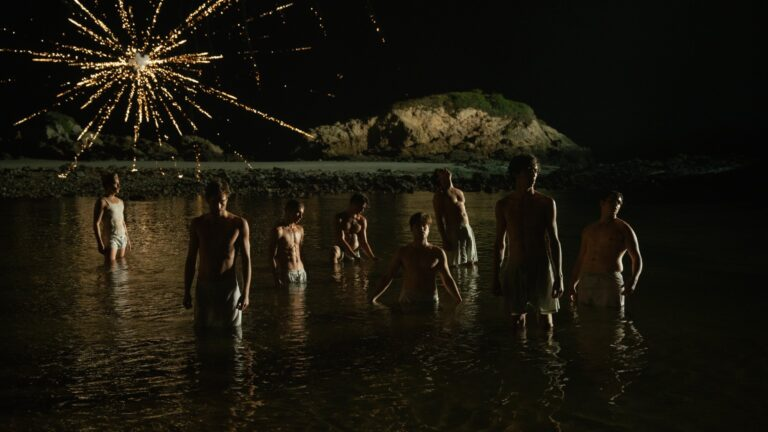
Using the incomplete work La bola Negra by Lorca, the title translates to black ball, which is used as the voting method of the character wanting to join the casino, Ambrossi and Calvo cover the three time periods, 1932, 1939 and 2017, with surprising ease. You are never confused about where you are. With gloriously lush music and stunning cinematography, the three interwoven stories move effortlessly between each other, often without feeling jarring.

The look of the film is very reminiscent of the scenes in which Al Pacino has to move to Italy in The Godfather. Bright colours with a haze about them that captures the surroundings in an eye-watering manner. This is a work of art to look at. It also has a story that you find yourself being drawn into, part romance, part wartime drama, part investigation, but all dealing with the subject of being gay in times when it was far from acceptable, especially during the 1930s sections.
Carlos, from a family that demands he uphold strong traditions, is thrown into a world where he has to lie to be accepted by men who are clearly prejudiced and refuse to let anyone outside what they consider the norm into their club. Sebastian has to deal with the conflict of his attraction to the enemy while working with those who have forced him into a position he doesn’t want. This is one of the central themes: the conflict of thoughts and ideas, and the pain it brings. Meanwhile, the discovery of the missing manuscript brings the conflict between mother and son to light. This mother refuses to accept that her father existed and doesn’t want her son to have anything to do with the inheritance.

This film brings together so many ideas that they would weigh down some films. Not here. Each one is embraced and feels so natural to include, while you wonder how delicious the whole thing looks. It is all handled so sensitively. It also tackles the questions of LGBTQ+ in a way that never exploits and shows just how hard it was to be in a position such as this in a time when being accepted was almost impossible.
The performances are stunning, particularly from composer and musical Guitarricadelafuente, whose performance as Sebastian is sensitively understated in a film overwhelmed by passion. It is a heartbreaking, touching performance, bolstered by a counterperformance from Miguel Bernardeau as Rafael, the soldier Sebastian has to guard. Penelope Cruz almost steals the film as a tough showgirl sent to entertain the troops, and it wouldn’t be a surprise if she won a supporting actress award.
La Bola Negra is a stunning piece of cinema. An epic drama that not only has the quality of a five-star film but also stays with you long after the lights are up. It will touch your heart and make you think as you wonder how fantastic the whole production is.
5 out of 5
Directors: Javier Ambrossi and Javier Calvo
Starring: Guitarricadelafuente, Miguel Bernardeau, Milo Quifes, Carlos Gonzalez, Penelope Cruz, Glenn Close, Lola Duenas, Antonio de la Torre, Natalia de Molina, Albert Pla
Written by: Javier Abmossi, Javier Calvo, (based on the play ‘La piedra oscura’ ) Alberto Conejero and (based on “La bola negra” and other texts) Federico Garcia Lorca
Running Time: 160 mins
Cert: 15
Release date: 6th November 2026


Agree again Stu. Definitely one of the films of the year.