
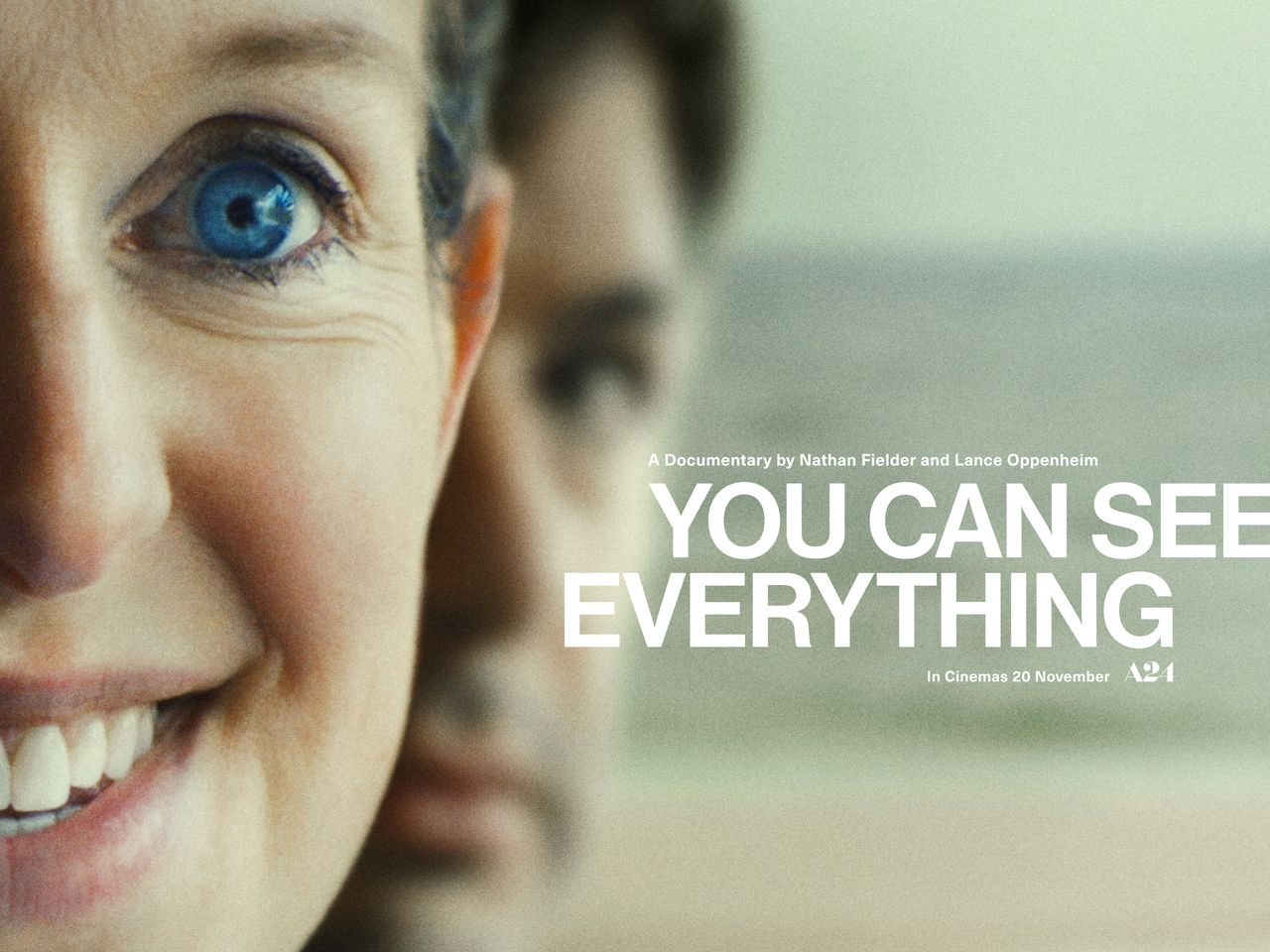
The story of Elizabeth Holmes is a very diverse one. The founder of Theranos, a company that created a machine that could diagnose 200 different ailments from a single drop of blood, was found guilty of fraud when the device was found never to work. Sentenced to 11 years in prison, Holmes and her partner, Billy Evans, invite filmmakers Nathan Fielder and Lance Oppenheim to document their every move in the days before Holmes starts her prison term. What should have been a warts-and-all tale of a woman who still pleads her innocence turns into something quite different, as this extraordinary 3-hour film, You Can See Everything, examines.

Holmes and Evans have two children together, and we are told about the events leading up to Holmes’s imprisonment, with Holmes seeming to be completely naive about what has happened, while her partner, Evans, who fell for her when she was accused of fraud, seems to be the man of her dreams. Yet something about him and his controlling ways feels slightly uncomfortable.
Fielder is a comedian and filmmaker best known for work that blurs the lines between fact and fiction, including TV shows like The Rehearsal and Nathan for You. At the same time, Oppenheim, who currently has the Robert Pattinson drama Primetime, gave us the weird tale of the retirement community in Some Kind of Heaven, mixing fact and fiction. Fielder is the face of the tale, being invited by Holmes to stay in their home, which he initially refuses but eventually starts living with the couple. While he is there, he and the documentary team start noticing some very odd behaviour, none more so from Evans.
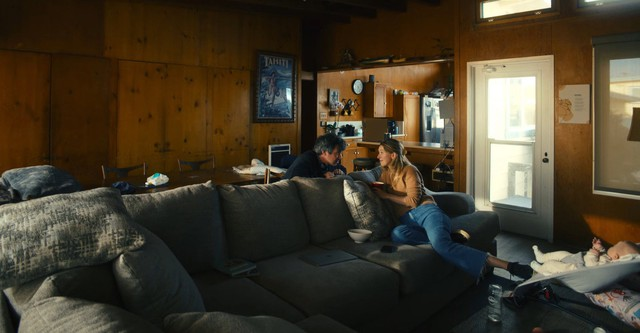
After 90 minutes, Holmes enters the prison, but there is still another hour and a half to go. This is when the film takes an altogether different journey, as Fielder’s initial concerns about Evans become a focal point of the story, especially when he announces that Theranos is returning.
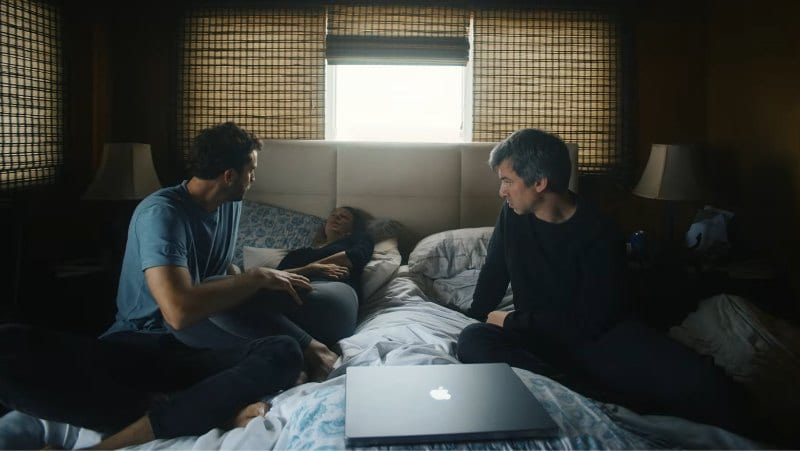
This film grips from start to finish and is more dramatic than any screen drama around. With Fielder peeking around corners or hidden in shadows as he tries to find the truth about Holmes, and then turning to actress Amanda Seyfried, who played Holmes in the TV series The Dropout, to help with dramatising the events that the team couldn’t film, but also to help dig deeper into the strange behaviour of Evans.
It does throw up loads of questions to unpack, but without giving any clear answers, which allows the audience to make their own minds up as to whether Holmes was a naive genius who genuinely wanted to create a machine that would change the medical world, or if she is as manipulative as people believe, hiding behind the big blue eyes, or if she is a woman who has been controlled by men who know she is an easy victim.
As the film takes us on this bizarre journey, it also makes us feel very uncomfortable with extreme close-ups. One scene, in which Holmes tries to convince Fielder that she is being truthful, has already become a viral sensation and the reason for the film’s success. Once again, 2026 has become the year of the low-budget sensation. With a budget of around $7 million, the film has already made nearly £100 million worldwide. It also manages to be very funny and incredibly shocking. At one point, the audience I was watching this with just gasped as a confession was shared.

You Can See Everything is an outstanding, utterly gripping, often mind-blowing documentary that will leave you in deep discussion afterwards. You can understand why it has been a huge success, and hopefully that success continues over here. Even if you know very little about Holmes and Theranos, I urge you to see this extraordinary film.
5 out of 5
Directors: Nathan Fielder and Lance Oppenheim
Starring: Nathan Fielder, Elizabeth Holmes, Billy Evans, Amanda Seyfried, Christopher Abbott, Lance Oppenheim, Gary Wilmes, Phillip Andre Botello
Running Time: 174 mins
Cert: 15
Release date: 20th November 2026

